
Spinal instability happens when the vertebrae move more than they should.
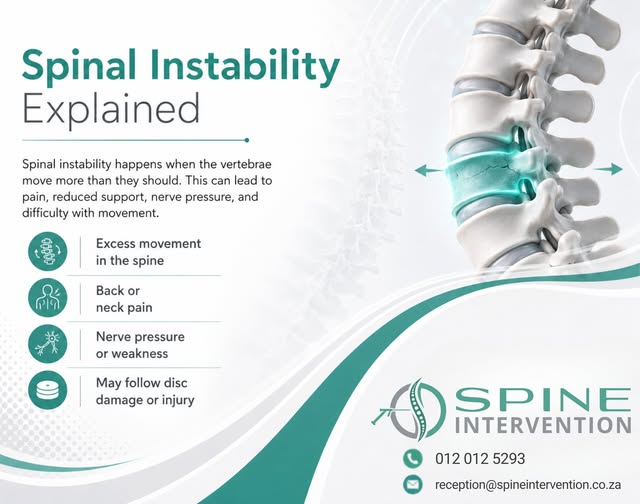
This can lead to pain, reduced support, nerve pressure and difficulty with movement.
- Excess movement in the spine
- Back or neck pain
- Nerve pressure or weakness
- May follow disc damage or injury
Spinal instability happens when the vertebrae move more than they should, which can affect the spine’s normal support, alignment, and movement.
When the spine becomes unstable, it may lead to back or neck pain, nerve pressure, weakness, stiffness, or difficulty with everyday activities. In some cases, spinal instability can develop after disc damage, trauma, degeneration, or previous spinal problems.
Because the symptoms can overlap with other spine conditions, an accurate assessment is important. Identifying the cause of the instability helps guide the right treatment plan and supports better long term function.
At Spine Intervention, we focus on expert assessment, advanced spine care, and personalised treatment to help patients manage pain, improve movement, and regain confidence in daily life.
To book an appointment, contact Spine Intervention:
Tel: 012 012 5293
E-mail: reception@spineintervention.co.za