
Tubular Microdiscectomy and Microdecompression
This minimally invasive procedure is used to relieve pressure on compressed spinal nerves. Instead of cutting through the surrounding muscles, a series of small tubes are gently used to create a pathway to the affected area. The nerve is then carefully decompressed using microsurgical techniques, helping to reduce pain while preserving the surrounding muscle tissue as much as possible.
Transforaminal Endoscopic Spine Surgery
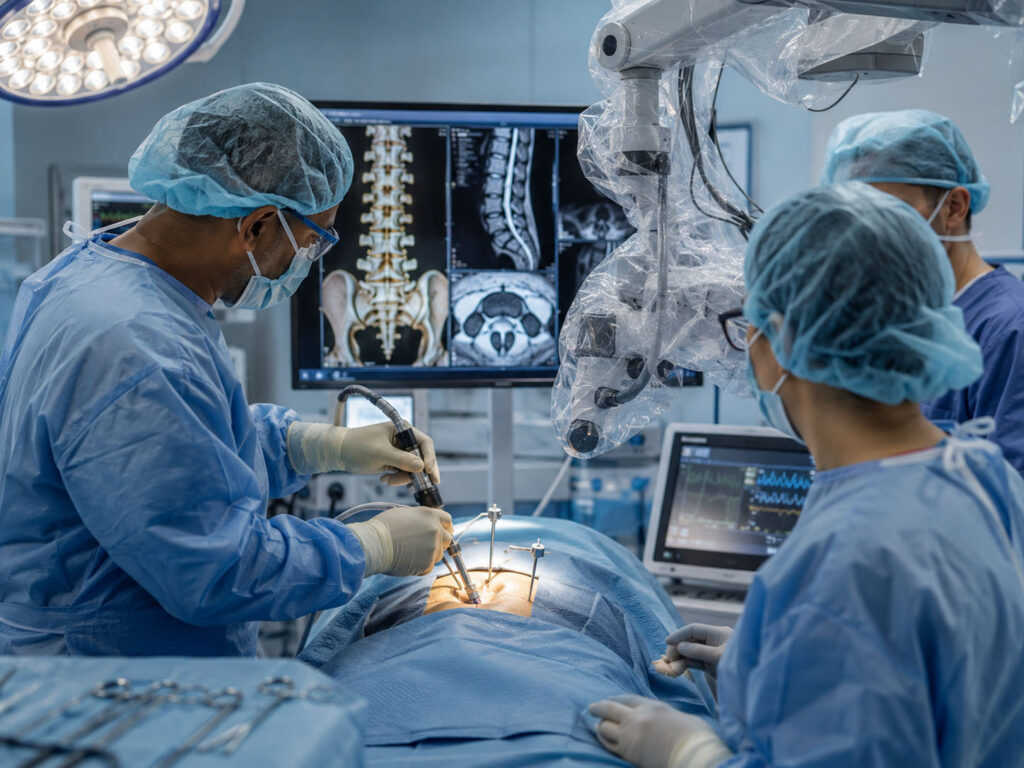
Transforaminal endoscopic spine surgery is a highly focused procedure performed through a very small incision of approximately 8mm. In many cases, it can be done using local anaesthetic together with light conscious sedation. This approach allows the surgeon to access the spine through a natural side opening and treat the affected area with minimal disruption to surrounding tissue.
Interlaminar Endoscopic Spine Surgery
This procedure uses endoscopic technology to treat nerve compression inside the spinal canal. Through a small access point, the surgeon can remove selected bone or disc material that is placing pressure on the nerves. The goal is to create more space for the nerves, reduce irritation, and improve symptoms such as pain, numbness, or weakness.
Unilateral Biportal Endoscopic Spine Surgery
Unilateral biportal endoscopic spine surgery uses two small access points. One is used for the camera, and the other is used for the surgical instruments. This allows the surgeon to clearly view and treat the affected spinal area with precision. The technique may be used for various spinal conditions and is designed to reduce muscle trauma, support quicker recovery, and improve patient comfort.
To book an appointment, contact Spine Intervention:
Tel: 012 012 5293
E-mail: reception@spineintervention.co.za